MLB Free Agent Rankings 2026-27: Tarik Skubal, Freddy Peralta, Teruaki Sato headline this offseason'
转载声明:本文转载自 NBC Sports,版权归原作者及原媒体所有。
Welcome to our post-World Series list of the winter’s top 100 free agents. We’re potentially looking at a flurry of November activity ahead of an expected December lockout, and players are ranked from biggest projected contract to smallest, with an adjustment for multiyear deals.
Excluded from the rankings are players whose club options are locks to be exercised (Ronald Acuña Jr, Drew Rasmussen, Sandy Alcantara and Nick Pivetta are some obvious examples) and those with player options likely to stay put. There’s the chance Bo Bichette (two years, $84 million), Luis Severino (one year, $22 million), Ryan Helsley (one year, $14 million) or Tatsuya Imai (two years, $36 million) could choose to leave if they’re particularly unhappy in their situations, but they’d certainly cost themselves money in doing so.
All ages are as of Apr. 1, 2027.
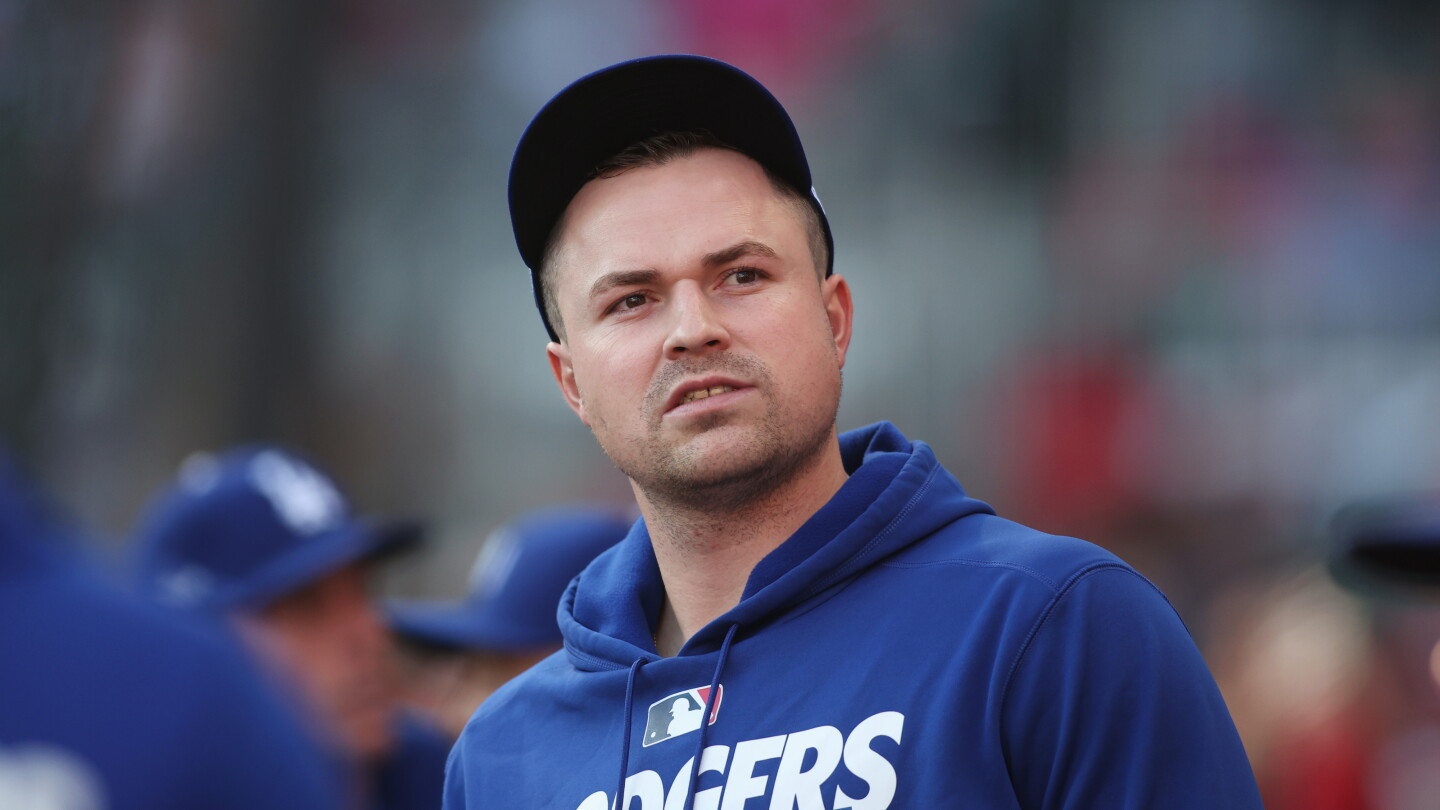
Skubal obviously won’t claim a third straight Cy Young after missing time to get debris removed from his elbow and switching leagues in going from the Tigers to the Dodgers at the deadline, but his performance hardly slipped at all; he struck out 30 percent of the batters he faced for a fourth straight season and limited walks and homers just as much as usual. That he didn’t get the chance to overdo it in the postseason and that he won’t be saddled with a qualifying offer as a result of the trade means there’s really nothing to scare off would-be suitors open to making him the highest-paid pitcher of all-time.
Prediction : seven years, $400 million
After being limited to 15 starts by shoulder and knee injuries, King didn’t get the kind of contract offers he was looking for as a free agent last winter and re-signed with the Padres on a three-year, $75 million deal with an opt out after year one. Since he was able to make 32 starts with a 3.21 ERA last season and especially shine in the postseason, allowing just one run in 14 innings over two starts and a relief appearance, there’s little doubt he’ll do better this time around. It is of some concern that his strikeout rate has dipped from 28 percent in his first full year as a starter in 2024 to 25 percent in 2025 and just 21 percent in 2026, but his velocity last season was actually up a tad and he’s also been getting more grounders. What works in his favor is that he has considerably less mileage on his arm than most 31-year-olds, and he’s ineligible for a qualifying offer after getting one last year.
Prediction : five years, $140 million
Peralta’s resurgence with the Rays came to an unfortunate halt in Game 3 of the World Series, but there was some bad luck involved there. The ALCS MVP still ended up with a 2.95 ERA in 21 1/3 innings in October after coming in at 3.25 in his 10 starts following the trade from the Mets. Peralta’s strikeout rate dipped from 28 percent in 2024 and ’25 to 21 percent last season and actually fell from 22 percent with the Mets to 20 percent with the Rays, but his velocity has held steady. Part of the problem was that ABS cost him some called strikes, and he might be able to adapt better there next year.
Prediction : five years, $135 million
Suzuki’s bat has been terrifically steady in producing OPS+s of 130, 138, 125 and 131 the last four years, but his 2026 still stands out for the improvement he made defensively. Primarily a DH after the Cubs traded for Kyle Tucker in 2025, Suzuki returned to right field last season and graded out far better than ever before. That sets him up for potentially the biggest contract among position player free agents this winter. Randy Arozarena did outhit him last season, but Suzuki has the somewhat superior offensive track record and is the better defender.
Prediction : four years, $120 million
Sato will be this winter’s biggest import, assuming that he agrees to a contract after being posted by Hanshin. Primarily a third baseman in Japan, he has also logged considerable outfield time and might be viewed as a better fit in right or left by major league teams. Sato led the Central League with 39 homers (four more than anyone else) and a .991 OPS (40 points better than second place) in 2026. He also far and away led the Central League in homers with 40 in 2025, though part of that was because Munetaka Murakami and Kazuma Okamoto missed big chunks of the season with injury. That season, both Murakami (1.043 OPS in 56 games) and Okamoto (1.014 OPS in 69 games) were somewhat more productive than Sato (.924 OPS in 139 games) on the whole. Sato, though, took another step forward afterwards, and that both Murakami and Okamoto met or slightly exceeded expectations in their MLB debuts figures to benefit Sato’s wallet.
Prediction : five years, $130 million
Arozarena picked a great time for a career year, hitting .281 in 2026 after coming in at .219 and .238 the previous two years. His 148 OPS+ was well up from his career mark of 121, and he led the AL with 113 runs scored despite being dropped from the leadoff spot to the middle of the order initially because of Seattle’s acquisition of Brendan Donovan. He also played in 150 games for a fifth straight season, a particularly remarkable achievement given that he’s a ball magnet in the batter’s box (53 HBPs the last two years). The knock on Arozarena is defense; it wasn’t good even when he was fast, and his sprint speed has dropped steadily in recent years, leaving him in just the 40th percentile of major leaguers in 2026. It’ll be interesting to see how he feels about DHing, since some suitors might prefer him there.
Prediction : four years, $112 million
Rogers was one of the AL’s worst starters through two months last season, but his final 20 starts saw him post a 2.90 ERA and a 119/21 K/BB in 121 innings. Overall, he has a 3.16 ERA in 48 starts since pitching his way back to the majors in 2025. His command keeps getting better, and his stuff still grades out quite well, even though his strikeout rate has dropped some. Free agency should see him quadruple his $6.2 million salary from his final arbitration season.
Prediction : four years, $108 million
Lowe’s first and possibly only season in Pittsburgh saw him hit 35 homers, drive in 96 and post new career highs of 5.4 bWAR and 656 plate appearances. His 121 OPS+ was actually a tad lower than his career mark of 123, but it’s impressive that he finished that well while playing every day and facing lefties about twice as often as his career rate. Especially important for his next contract is that his defensive numbers were far better than usual; there was a good argument for the Pirates playing him in left field after acquiring him from the Rays, but he stayed at second and graded out as well above average. Giving a 32-year-old second baseman a big-money, long-term deal has just never been a good idea, but Lowe seems like about as good of a bet for 2027 as any position player here.
Prediction : four years, $96 million
Chisholm entered 2026 as arguably the top position player prize in the winter’s free agent class. That’s off the board now, but he might wind up being undervalued after some late benchings and a couple of postseason gaffes. Chisholm finished 2026 at .231/.312/.399, which was down from .250/.322/.456 the previous three years. Trying to take advantage of Yankee Stadium’s short wall in right probably didn’t help him; he boasted career-high pull and flyball rates the last two years, and his strikeout rates jumped back up after he showed real improvement there in 2024. Chisholm is a fine second baseman despite his lapses, and he adds to his value with his work on the basepaths. He’d make a lot of sense on a three-year contract, as opposed to the six-year deal it looked like he might command previously.
Prediction : three years, $81 million
At age 36, Gray tied for the major league lead with 18 wins and posted a career-best 2.72 ERA in his Boston debut. He could stick around for $30 million, but since there’s a $10 million buyout attached, turning that down is a no-brainer. He’ll hit the market and still get his $30 million per year; it’s just going to be up to him whether he wants it for one, two or three seasons. It is of some note that his strikeout rate did drop to 22 percent last season after coming in at 30 percent in 2024 and 27 percent in 2025.
Prediction : two years, $64 million
After saving 31 games with a 1.71 ERA for Seibu in 2025, Taira made the move back to the rotation last season and was even better, finishing with a ridiculous 1.36 ERA and a 141/45 K/BB in 146 innings. Of course, Japan is in a particularly low scoring era right now, with Pacific League teams averaging only 3.72 runs per game last season, but Taira was still the circuit’s only starter with a sub-2.00 ERA. Taira stands just 5-foot-8, but he averages 96 mph with his fastball, has an excellent cutter and controls lefties with his changeup. Durability might be an issue -- he’s been a starter in just two of his eight seasons in Japan -- but he has No.2-starter stuff.
Prediction : five years, $100 million
Holmes’ second year as a big-league starter was interrupted by a fractured fibula suffered when he was hit by a liner, but he wound up with a 3.29 ERA in his 18 starts. His groundball rate isn’t quite as extreme as a starter as it was out of the pen, but he’s still elite there, and though he’s 34, his arm should probably be regarded as a couple of years younger than that. He’s an ideal No. 3 starter.
Prediction : three years, $72 million
The top available reliever this winter couldn’t stay healthy as a starter, throwing a total of 156 innings between the majors and minors from 2019-23. However, since making the move to the pen in 2024, he’s been the picture of good health and racked up a 2.58 ERA and a 248/66 K/BB over 223 1/3 innings. That he did undertake such a heavy workload last season, throwing 90 innings between the regular season and playoffs, is a little scary. But this is a phenomenally talented pitcher. Of the 276 pitchers to throw 60 innings in 2026, Morejon had the fourth-highest average fastball velocity (99.3 mph), the fourth-highest groundball rate and the 17th-best strikeout rate. Even though he’s never closed, he might just land the biggest contract ever for a reliever.
Prediction : four years, $76 million
Now an unheralded offensive force, Jeffers hit .210 with a 32 percent strikeout rate in his first three seasons in the majors, starting with the short 2020. When he busted out in 2023, batting .276/.369/.490, it still came with a 28 percent strikeout rate. However, he dropped his K rate to 20 percent in 2024 and 2025 and finished at 18 percent while hitting .256/.353/.461 last season. Obscuring Jeffers’ success is that his two best seasons have both been affected by injury, as he played in only 92 games last season after suffering a broken hamate bone in May. His defense is merely average and his career high for starts as a catcher is just 81, so he probably makes the most sense for a team with another decent catcher and revolving door-type DH situation.
Prediction : three years, $66 million
Following six excellent years in a row, Gausman slipped last season, finishing with a 4.51 ERA for the Blue Jays and Cubs and then struggling in his one postseason start. Still, it wasn’t a particularly discouraging showing. His velocity is down only around one mph from his peak years, and while his strikeout rate has dipped significantly from his 2020-23 peak, he was still above average there at 24.5 percent last season. He also made his usual 32 starts. Assuming that he wants to continue his career, there will be no shortage of suitors.
Prediction : two years, $48 million
After working hard to reestablish himself as a second baseman and also bouncing back at the plate, Arraez clearly seems like a better bet this winter than last, when he took a one-year, $12 million deal from the Giants. Still, he wasn’t nearly as good either offensively or defensively after San Francisco moved him. Losing infield guru Ron Washington probably played a role in the defensive decline. Perhaps the offensive slowdown was a fluke, but it’s worth noting that Arraez’s exit velocity numbers are still down from his best years; he had a 30 percent hard-hit rate from 2020-22, but he’s come in at 17 and 19 percent the last two seasons. Even though he’s just entering his age-30 season, he makes a lot more sense on a one-year deal than a long-term pact.
Prediction : two years, $46 million
A lifetime .211/.307/.365 hitter through age 29, Bauers busted out with a career year at age 30, hitting .266/.389/.494 with 26 homers and then took home NLCS MVP honors for the world champs. Bauers did show signs of the big step forward in 2025, with his bat speed and exit velocity numbers improving considerably and his strikeout rate dropping at the same time. So, he’s not entirely a one-year wonder.
Prediction : three years, $54 million
Probably only Freddy Peralta did more than Mahle to boost his contract value after the trade deadline last season. Mahle, who took a one-year, $10 million deal last winter, went 3-9 with a 5.13 ERA before being dumped by the Giants, only to finish 4-1 with a 1.99 ERA in nine starts for the Braves. He also had a 1.35 ERA in two fine postseason outings. Mahle averaged 92.8 mph with his fastball last season, his high mark since returning from Tommy John in 2024, and he got his strikeout rate up to 22 percent. Durability remains a concern, but he’s probably in line to secure the two-year deal he couldn’t find last winter.
Prediction : two years, $42 million
Bednar saved 35 games and posted a sub-3.00 ERA for the fifth time in his six full seasons while serving as the Yankees’ closer last season. His strikeout rate dipped from a career-best 34 percent in 2025 to 27 percent in 2026, but that was because he leaned into his splitter over his curveball and became more of a groundball pitcher in the process; he had a career groundball rate of 39 percent before coming in at 51 percent last season. He’s pretty clearly the top right-handed reliever available.
Prediction : three years, $51 million
A stunning early season success in his return from Japan, Griffin opened up 12-2 with a 2.76 ERA for the Nationals, making the All-Star team in the process. His ERA jumped after a trade to Cleveland, but it was mostly because of two particularly bad outings and his peripherals held steady. In the postseason, he had a 3.48 ERA and a 15/0 K/BB in 10 1/3 innings over three outings. Griffin’s 87-90 mph cutter was a terrific weapon last season, helping to make up for his mediocre curve and slider. He should be in line for at least a two-year deal at a big raise from the $5.5 million he made last season.
Prediction : two years, $40 million
The ever reliable Happ has finished with 21-25 homers and 86-89 runs scored in 150-158 games played each of the last four seasons, but 2026 did bring some new concerns. His strikeout rate shot up from 23 percent the previous four years to 30 percent, and instead of hitting his usual .240-.250, he came in at .218. The switch-hitting Happ has almost always been better against righties than lefties, but he took it to an extreme last season, coming in at just .145/.217/.267 versus southpaws. The Cubs sat him against lefties late in the year, and he might need to be looked at as a platoon player going forward.
Prediction : two years, $40 million
Busting out at age 36, Martinez finished sixth in the AL in ERA and threw a career-high 180 innings in his first season for the Rays. His contract with the team includes a $20 million mutual option, but he’ll get a $4 million buyout after declining that and will return to free agency. A master of inducing soft contact, Martinez thrived despite a 15 percent strikeout rate, the lowest mark among qualified starters. Staying with Tampa Bay would certainly help his chances of putting together another strong campaign in 2027, but he’ll likely find better offers elsewhere.
Prediction : two years, $40 million
Imanaga started and finished pretty strong last season, with more than one-third of the runs he allowed on the year coming in one four-start span beginning in mid-May (26 ER in 21 2/3 innings). In the second half, he had a 3.12 ERA and a 69/10 K/BB in 66 1/3 innings. Still, the market might not be very kind to him, given his big-time issues with the home run ball and concerns about how much moving away from the Cubs’ top-notch defense might hurt him. At least he won’t have to deal with the qualifying offer this year after accepting it last winter.
Prediction : two years, $38 million
May again finished with an ERA in the high 4.00s in 2026, though he did so in more encouraging fashion than in 2025; his average fastball was back up to 96.9 mph after coming in at 95.4 mph in his return from Tommy John, his strikeout rate improved from 21 percent to 23 percent and his walk rate dropped from 9.6 percent to 8.1 percent. As a result, he had a 3.99 SIERA and a 3.63 FIP alongside his 4.70 ERA. He’s still relatively young, and he doesn’t have much mileage on his arm. He should be able to land at least a two-year deal if that’s what he wants.
Prediction : two years, $38 million
Mize allowed one run or fewer in nine of his 16 starts for the Tigers last season and had a 2.70 ERA when he was traded to the Padres at the deadline. He went on to give up eight runs in his first outing for his new team and finished with a 7.46 ERA and a 25/19 K/BB over 44 2/3 innings in 10 starts overall, torpedoing his value as he enters free agency for the first time. Mize turns 30 in May, has a career 99 ERA+ and has never qualified for an ERA title. He won’t struggle to find work, but a one-year deal would seem to be the likely outcome here.
Prediction : one year, $22 million
Bubic has remained plagued by arm problems since returning from Tommy John surgery in 2024. In 2025, though, he had a terrific 2.55 ERA in 20 starts for the Royals before getting shut down with a shoulder injury. Last season, he had a 4.11 ERA in nine starts before going down with elbow soreness. The Dodgers picked him up at the deadline in the hopes that he might help as a reliever, but after looking good in the second half of September, he gave up two runs in 1 1/3 innings during the postseason. A healthy Bubic rates as one of the most intriguing pitchers on this list, and one imagines large-market teams will be willing to roll the dice on a significant one-year contract.
Prediction : one year, $21 million
Although he’s just 30, Varsho seems like a real question mark at this point. He followed up his most intriguing offensive season in 2025 with his worst year in 2026 and then needed wrist surgery. Defensively, he’s losing foot speed and has one of the weakest arms in the league. Varsho sacrificed contact for power in 2025 and hit 20 homers in just 71 games, though he struck out 28 percent of the time in the process. Last season, that all went away; he got his strikeout rate down to 20 percent, but all of the weak contact produced a mere .221/.281/.355 line and 12 homers in 141 games. His offense would be less of a concern if he projected as a top-flight center fielder going forward, but that’s not assured. A long-term deal seems quite risky.
Prediction : one year, $20 million
Boyd missed time in the first half with a biceps strain and then a knee injury suffered while parenting. He went 8-4 with a 3.42 ERA in 17 starts after returning from the second injury, but his strikeout rate dipped all of the way to 15.5 percent, even though his velocity was fine. Teams will probably want to go year-to-year with Boyd as he enters his age-36 season.
Prediction : one year, $20 million
After being declared obsolete in Queens, Peterson came up pretty big for the Cubs last season, going 6-2 with a 3.70 ERA in 15 starts and one relief appearance. He very reliably posts a 20 percent strikeout rate, a 10 percent walk rate and a 50 percent groundball rate, and after that, it’s really all about his batting average on balls in play. Last season, it was .350 while he was posting a 6.09 ERA for the Mets and .293 afterwards. Since he is what he is, he makes more sense on a multiyear deal than the other starting pitchers in this range.
Prediction : two years, $28 million
Although he required a rare IL stint due to a shoulder issue in April, Iglesias got to 60 innings and saved 34 games with a 2.55 ERA last season. He has a 2.59 ERA since the beginning of the decade, and he’s just 13 saves away from 300 for his career. He was fine with taking a one-year deal last winter, and if that holds true again, he’ll be very popular with every team looking for a plug-and-play solution in the ninth inning.
Prediction : one year, $17 million
Tarik Skubal is surely the Dodgers’ top free agent, but Vesia is the guy half the league will be trying to lure away. The left-handed setup man has a 2.45 ERA in 207 appearances the last three years. In none of those three seasons have either lefties or righties hit even .200 against him. He also has a 1.59 ERA in 31 career postseason appearances. The concern here is that Vesia’s fastball velocity has dropped slightly each season, going from a peak of 94.4 mph in 2023 to 92.1 mph in 2026. It hasn’t been a problem yet, but it eventually will become one if it continues. Still, he’d be a nice fit everywhere.
Prediction : three years, $33 million
Robert hit .264/.315/.542 and finished at 5.3 bWAR in his lone All-Star campaign in 2023. In three years since, he’s batted .223/.290/.379 and racked up 3.6 bWAR over 271 games. The fascinating thing is that he greatly improved his bat speed and lowered his strikeout rate in the 61 games he played last season. Of the 519 players to take 100 swings, his 77.3-mph average ranked 10th, just ahead of Kyle Schwarber and James Wood. There’s a case for the Orioles exercising his $20 million option and hoping for the best, but they’ll probably buy him out for $2 million and maybe look to bring him back a little cheaper. The talent really hasn’t gone anywhere, if only he can stay on the field.
Prediction : one year, $16 million
Soroka had a 3.07 ERA in 15 starts when he went down last June with a glute injury. He returned to make three starts in August, went back on the IL with a shoulder issue and then came back to finish up with a 3.48 ERA and a 23/5 K/BB in 20 2/3 innings in September. Soroka has now been on the IL with shoulder problems in three straight seasons. He has a higher ceiling than most of the starters in this range, but he’s made 20 starts just twice as a major leaguer.
Prediction : one year, $16 million
Ward was eight days shy of qualifying for free agency last winter, something that’s going to cost him a whole bunch of money after his power drought in Baltimore and complete fade to irrelevance following a trade to Seattle. Ward took enough walks to maintain some value in four months with the Orioles, hitting .246/.383/.346, but he came in at just .125/.238/.148 in 101 plate appearances after being traded to the Mariners and finished with only seven homers in 607 plate appearances overall. In 2025, he hit 36 homers in 663 plate appearances for the Angels. Ward’s decline might have been related to a bone bruise in his hand he suffered in April. At least, that’s what the team that signs him this winter will be hoping.
Prediction : one year, $16 million
The two-year, $11.5 million deal the Cubs signed Kelly to prior to 2025 seemed like an overpay, but they obviously knew what they were doing; he hit .254/.335/.402 with 27 homers in 231 games. Baseball-reference puts him at 5.5 WAR over the two seasons, which tops his total of 4.1 from his first nine seasons combined. It seems likely that the Cubs will make a bid to keep him around, but he should be very popular as the best defender among the three starter-type catchers available in free agency.
Prediction : two years, $24 million
Everyone by now is very familiar with the fact that Jake Bauers nearly retired after the 2024 season. France, whose career was similarly hanging on by a thread, took a different route that same winter, telling teams he’d be willing to try catching if it would keep him in the league. He wound up getting a non-guaranteed $1 million deal from the Twins, no catching gear required. Last season, he played for $1.35 million for the Padres, and he might have been at risk of getting cut early on if Nick Castellanos had performed better. This winter, France is poised to about double his career earnings after hitting .295/.363/.502 with a personal-best 21 homers.
Prediction : one year, $15 million
One of Japan’s most reliable starters, Itoh hasn’t finished with an ERA higher than 3.46 in his six years in Nippon Ham’s rotation. He’s been a part of both of the country’s WBC teams during the span, and he won the Sawamura Award as NPB’s top pitcher in 2025. In 2026, he faded a bit, going 10-10 with a 3.18 ERA and a 159/34 K/BB in 172 2/3 innings. Itoh throws pretty much every pitch in the book, and his velocity has picked up a bit through the years, though he’ll be below average in that regard in the majors. It’s possible he’ll be a No. 3 here as long as he maintains his excellent walk rate. He’s going to be rather homer prone, though.
Prediction : three years, $30 million
Using the pitch for the first time since 2022, Ray reincorporated his sinker to good effect for the Giants last summer, going 7-0 with a 1.65 ERA in 10 starts during June and July. The magic wore off after a trade to San Diego, and he limped home with a 5.02 ERA and an ugly 33/27 K/BB in 43 innings for his new team. He still had a 3.59 ERA overall, but his 20 percent strikeout and 12 percent walk rates were hardly encouraging. He won’t have difficulty finding a spot, but he doesn’t seem like a candidate for another multiyear deal at age 35.
Prediction : one year, $15 million
Bassitt required back surgery in June after opening the season with a 5.27 ERA. Once he returned in August, he was throwing harder than he had since 2024, averaging 93.0 mph with his fastball, and finished up with a 3.75 ERA in eight starts. He’ll probably still have to take a little pay cut from the $18.5 million he made last season, but he seems like a solid enough one-year option at age 38.
Prediction : one year, $15 million
Hitting at the top level of his ability and performing especially well with RISP, Dubón won over Braves fans and especially Braves writers in his first season in Atlanta. His defensive versatility makes him nice to have around even in his weaker years, but as a lifetime .255/.293/.361 hitter against righties, he has been overexposed at times, and it’d still be smarter to view him as a 10th man than as an everyday guy.
Prediction : two years, $22 million
Abreu would have projected as this winter’s top free agent reliever a year ago, but he struggled mightily both in terms of results and with his velocity early on in 2026. Fortunately, he began to return to form in June, posting a 1.87 ERA and a 32 percent strikeout rate in his final 44 appearances. His fastball didn’t come all of the way back, but he did average 96.4 mph over the final three months, which isn’t so far down from 97.3 mph in 2025. He seems like a risky long-term proposition at this point, but if he’s fine with a shorter deal, he could double his $5.85 million salary from last season.
Prediction : two years, $22 million
The left-handed Romero is fifth in the majors with 77 holds the last three years, and while he was probably only the Brewers’ fifth most important reliever in the postseason, he had a great October in allowing one run and striking out 11 in eight innings. He’s pretty much a lock for a multiyear deal this winter.
Prediction : three years, $27 million
Seemingly banged up throughout, Springer put together a 2026 that much more closely resembled his poor 2024 than his terrific 2025. The positives were that he mostly maintained his bat speed, with his 73.2 mph average swing coming in closer to 2025 (73.7 mph) than 2024 (71.9 mph) and his strikeout rate held steady at 18.4 percent. A healthier Springer probably still has something left in the tank. Unfortunately, in order to stay healthy, he probably needs to be completely limited to DH duties, and it’d take more than a mild rebound to make him an impact player there. It’s possible he’ll choose to call it.
Prediction : one year, $13 million
Flaherty could have opted out of his Tigers contract last winter, but he stayed put and got $20 million for 2026. He’ll almost certainly have to settle for less this winter after another disappointing season in which he dealt with leg and elbow injuries and went 3-8 with a 4.48 ERA in 88 1/3 innings. Flaherty’s strikeout rate was still fine at 26 percent, but too many flyballs and walks are doing him in, and his velocity is now down about 1.5 mph from where he peaked in 2019. That he’s been both healthy and effective just one of the last five years doesn’t bode well.
Prediction : one year, $13 million
How much is anyone going to bet on a guy who thought his career might be over a few months ago? Woodruff believed he was going to need another surgery in July after posting a 2.98 ERA in nine starts for the Brewers last season, but he avoided it and came back to pitch the ninth inning of Game 3 of the World Series. His average fastball last season was 91.8 mph, down from 93.1 mph in his return from shoulder surgery in 2025 and a peak of 96.6 mph in 2020, but thus far, his velocity has had no real effect on his performance.
Prediction : one year, $13 million
Bohm should be a quality bat with his low strikeout rate and solid exit velocity numbers, but he’s been only a league-average hitter over his six-plus years. In 2026, he wound up with an 87 OPS+, even though he placed in the 78th percentile of major leaguers in average exit velocity, 69th percentile in hard-hit rate and 88th percentile in avoiding strikeouts. Bohm also had a tough defensive year, leaving his future as a third baseman in question. At least he does have his reputation as a run producer, and he’ll be able to land a starting job at first if no one trusts him at the hot corner. He’s probably looking at a one-year deal, though.
Prediction : one year, $13 million
Bieber surprised everyone by sticking with the Blue Jays for $12 million last season instead of returning to free agency following an impressive run in his return from Tommy John, but then he admitted to dealing with forearm fatigue at the end of the year. He missed nearly three months to open the season, came back to go 5-2 with a 4.37 ERA in 11 starts and then was shut down again with inflammation in the back of his shoulder. Bieber is still just 31, and his velocity last season was a little better than it was in his couple of years prior to Tommy John, though down 1-2 mph from his peak. He’ll probably be solid if healthy.
Prediction : one year, $13 million
Phillips was throwing smoke following his midseason return from Tommy John surgery, averaging a career best 96.9 mph with his fastball and striking out 31 percent of the hitters he faced. He was a little shaky in the postseason, but he pitched three scoreless frames anyway, keeping intact his streak of never having allowed a run in 18 1/3 career postseason innings. He’ll likely get some offers to close this winter.
Prediction : two years, $20 million
Grisham regressed after his career-best offensive performance from 2025, but he did so in a rather fascinating way. For starters, his strikeout rate dropped all of the way to 18 percent. It was 28 percent when he hit .191 from 2022-24 and 24 percent during his breakthrough 2025. Getting it down to 18 percent last season was especially impressive given how often he found himself in deep counts, and he didn’t really sacrifice any bat speed in the process. Still, thanks to a .222 BABIP, he finished with just a .211/.308/.395 line. Grisham’s speed has diminished to the point at which he needs to be moved to a corner, and the fact is that he’s hit enough to be a useful corner outfielder just once in the last five years. Still, if one attributes some of his 2026 decline to bad luck, he might be a decent one-year signing. He did have a reasonable .245 xBA and a .429 xSLG last season.
Prediction : one year, $12 million
The Tigers didn’t want Torres to take the qualifying offer when they made it a year ago, and while they didn’t make it a problem initially, he finished out the year in a reduced role after failing to attract any interest at the trade deadline. Still, while his power production was down, Torres ended up with a career-best .364 OBP in his 96 games, and it’s possible he’ll regain some bat speed next year now that he’s past the oblique injuries that troubled him over the summer. He’s probably looking at a one-year deal to serve as another team’s starting second baseman.
Prediction : one year, $12 million
It took Sandoval two full years to make it back from Tommy John surgery, and he wound up going just 1-7 with a 5.12 ERA for Boston over the final three months of last season. Still, it wasn’t a particularly discouraging showing for his future prospects. His velocity was right back to where it was before he got hurt, and even though he didn’t seem to have his usual feel for his breaking balls, he finished with a 23 percent strikeout rate that was also a match for his career mark. The results suggest he’s in line for a one-year deal and a chance to boost his value before returning to free agency next winter, but there might be a couple of teams willing to bet on him on a longer contract.
Prediction : one year, $12 million
Buehler was surprisingly reliable in making 32 starts last season and turned out to be the Padres’ good luck charm; they went 22-10 in his outings, even though he had a 4.63 ERA. In comparison, they were 15-17 with Michael King and his 3.21 ERA on the mound. Buehler’s velocity was no better than in 2025, but he was able to up his strikeout rate from 16 percent to 20 percent even as he was also throwing more sinkers and boosting his groundball rate to 48 percent. That’s enough to make him a reasonable option as a fourth starter.
Prediction : one year, $12 million
Burke struggled for years to match his breakout 2022 season with the Rangers, but now he’s entering free agency for the first time coming off the second best season of his career, having finished with a 2.30 ERA in an NL-high 77 appearances for the Reds. The ERA was kind of deceptive, though, as 13 of the 32 runs he allowed were unearned. Despite the heavy workload, he was throwing as hard as ever down the stretch, averaging 96.8 mph with his fastball in his final seven appearances. It should make him a candidate for a multiyear deal.
Prediction : two years, $17 million
Stephenson’s six big-league seasons have produced a .257/.335/.422 line that’s pretty good for a catcher, but no one was all that interested in acquiring him from the Reds at the deadline because of his poor framing behind the plate. The team that signs him this winter will be one that thinks it can fix that up or one that believes framing simply isn’t very important, though any team willing to dismiss his framing is still likely to be turned off by his issues throwing out basestealers.
Prediction : one year, $10 million
A fringe starter with a well below average fastball in his twenties, Blackburn was one of 2026’s nicest surprises, turning into a shutdown reliever while throwing 93-96 mph for an inning or two at a time. His 20.5 percent strikeout rate remained subpar, but he made up for it with a 55 percent groundball rate and allowed just seven homers in 85 innings. He also pitched six scoreless innings in the postseason.
Prediction : two years, $16 million
One of the game’s best reserves, Sosa finally has a chance to play regularly, if he wants it. It just probably wouldn’t be for a contender. Sosa is almost certainly best utilized the way the Phillies were doing it: starting against lefties and filling in against righties when injuries warrant. That’s gotten him 785 plate appearances over the last three seasons, during which time he’s hit .260/.303/.440 and amassed 5.5 bWAR.
Prediction : two years, $16 million
After a bit of a rough start in middle relief, Anderson enjoyed a nice season in his return from Korea, finishing with a 3.67 ERA and a 114/43 K/BB over 108 innings in 11 starts and 38 relief appearances. The Tigers have a $10 million option on his services and might choose to exercise it. If not, that’s probably about what he’ll get in free agency.
Prediction : one year, $10 million
More surprising than Loáisiga’s 2.42 ERA last season was that the oft-injured right-hander managed to make a career-high 67 appearances and throw 67 innings. The only time he was able to put in a full season with the Yankees was 2021, when he pitched 70 2/3 innings with a 2.17 ERA. That he’s not a big strikeout guy might hurt him some in free agency, but his ability to produce soft contact with high groundball rates is no fluke.
Prediction : two years, $16 million
As part of the two-year, $20 million pact he agreed to last winter, Pagán has a $10 million player option to return for a fourth season with the Reds in 2027. That’s probably right about or maybe a tad more than he’d get if he opted out. Pagán missed nearly two months with a hamstring injury last season, but he still made 45 appearances with a 3.38 ERA and converted 25 of his 28 save chances. He was actually 19-for-19 after returning from the injured list.
Prediction : one year, $10 million
Primarily a low-leverage guy in his three seasons with the Padres, Matsui finally started getting more work in close games late in the 2026 season, which he finished with a 1.83 ERA in 64 innings, and he allowed just an unearned run over 4 2/3 innings while pitching in five of the Padres’ six postseason games, earning a win and a hold in the process. Now he gets to decide whether to stick around in San Diego and earn $13.5 million over the next two seasons or opt out and try free agency. While contenders will probably only view him as a setup man, Matsui saved 236 games in Japan, and he might appreciate the chance to work as a closer in the U.S.
Prediction : two years, $16 million
A one-time top prospect for the Red Sox who missed four years after a pair of Tommy John surgeries, Espinoza has spent the last three years as a successful starter in Japan, going 13-6 with a 2.71 ERA and a 136/33 K/BB in 149 1/3 innings for Orix in 2026. With his command much improved from his days in the U.S., he has a chance to be a solid fourth or fifth starter.
Prediction : one year, $10 million
No longer a viable starting shortstop, Crawford might have a tough time in free agency, even though he’s still a league-average hitter. The early returns on his work at third base were encouraging. It’d be better still if he could play second, but a team that signs him for that spot would be doing so sight unseen. Crawford always provides quality at-bats, and he should do a little better in the average department after leaving T-Mobile Park behind. He’s just mostly bereft of upside.
Prediction : one year, $9 million
Eflin needed Tommy John surgery just one start into his 2026 season, and while his rehab has apparently gone quite well, he’ll probably be a bit behind entering 2027. Eflin’s 2025 was also pretty well ruined by shoulder and back problems, so he’s now three years removed from his last nice season with the Rays and Orioles in 2024 (3.59 ERA in 165 1/3 innings). He might need to take an incentive-laden deal.
Prediction : one year, $9 million
Suárez’s return to Cincinnati didn’t go as hoped, and when he was put on waivers in late August, no contender thought it was worth $3 million or so to add him to its lineup. Suárez, though, did finish strong, hitting six homers with a .935 OPS in September to finish with a .212/.307/.433 line. Suárez shouldn’t be looked at as a full-time third baseman any longer, and it is questionable whether the offense will be there to make him a legitimate asset as a designated hitter.
Prediction : one year, $9 million
The late-blooming Adam is finally eligible for major league free agency for the first time at 35, but it comes after a season in which he was limited to 34 1/3 innings by a shoulder issue. He posted a 2.62 ERA, but his strikeout rate was just 15.5 percent. From 2022-25, he had a 29.2 percent strikeout rate to go along with a 2.07 ERA in 256 2/3 innings. His 93.5 mph average with his fastball was also down two mph from his peak in 2024.
Prediction : one year, $9 million
Pederson shook off a horrible 2025, when he hit .191/.285/.328 in 96 games, to reemerge as a fine platoon DH last season, coming in at .235/.329/.487 with 26 homers in 432 plate appearances. It’s too bad he hasn’t really had much chance to prove himself at first base, since being able to play the field would certainly open his market. There just aren’t going to be all that many teams wanting to commit to a platoon DH.
Prediction : one year, $9 million
Newcomb was a nice surprise with the A’s in 2025, but given his history, skepticism seemed warranted. The White Sox signed him for $4.5 million with the idea of looking at him as a starter. They quickly bailed on that idea two weeks prior to Opening Day, but Newcomb proved very valuable while throwing up to three innings at a time, finishing with a 3.09 ERA in 90 1/3 innings. His average fastball jumped to 94.9 mph, up from 93.3 mph in 2025, and the extra oomph on his curve made it more valuable than ever before. He might be able to get some team to promise him a rotation spot as he returns to free agency this winter. Contenders, though, will likely want to use him much like the White Sox did.
Prediction : one year, $9 million
Singer earned $12.75 million in his final season of arbitration, so he might be one of those rare players looking at a paycut after making it to free agency for the first time. He finished 6-15 with a 5.85 ERA in his second year in Cincinnati, with his strikeout rate dropping to 17 percent from a career mark of 22 percent. He does have durability working in his favor -- he’s made 95 starts the last three years -- but his stuff is well below average at this point.
Prediction : one year, $9 million
It sounds like Machado, who had a 4.03 ERA in 135 appearances for the Nationals from 2021-23, will give MLB another try after a phenomenal year that saw him pitch 6 1/3 innings of two-run ball for WBC champion Venezuela and post a 1.20 ERA while earning 35 saves as Orix’s closer in Japan.
Prediction: two years, $14 million
After 10 seasons in Colorado, Freeland is expected to move on this winter. He had a dreadful 6.65 ERA last season, but it came with his usual strikeout rate, and his velocity has changed very little through the years. His ceiling is pretty well capped at this point, but he might be an adequate fourth or fifth starter elsewhere.
Prediction : one year, $8.5 million
71. Gregory Soto (32, RP, Pirates) : For once, the team that signed/acquired Soto experienced no regrets. 3.63 ERA was best since 2022, and 67 innings were a career high.
72. Zac Gallen (31, SP, Diamondbacks) : Downfall continued in 2026, with strikeout rate collapsing to 14 percent. His ERA has increased and his strikeout rate has decreased four years running.
73. Cal Quantrill (32, SP, Rangers) : Stunned with a 2.47 ERA in his 15 starts for Texas. He came in at 5.39 in 74 starts the previous three years.
74. Kenley Jansen (39, RP, Tigers) : 22 saves last season left Jansen two away from 500. He’s becoming quite homer prone, but he still mustered a 3.20 ERA and a 28 percent strikeout rate at age 38.
75. Steven Okert (35, RP, Astros) : Journeyman posted a 2.58 ERA and a 28 percent strikeout rate over 139 innings in his two seasons in Houston. He is losing velocity, though.
76. A.J. Minter (33, RP, Twins) : Hasn’t had a fully healthy season since 2023, but he had a 2.56 ERA in 45 2/3 innings last season, and his velocity improved some after Mets dealt him to Twins.
77. Josh Bell (34, 1B/DH, Twins) : 96 RBI is impressive, but he’s still a DH with a .740 OPS both last season and the last four years on average, and he lost some bat speed from 2025.
78. Tyrone Taylor (33, OF, Cubs) : Career-best .279/.325/.502 line at age 32 should lead to nice payday for the fine fourth outfielder. 4.7 bWAR in 927 plate appearances the last three years.
79. Kevin Ginkel (33, RP, Diamondbacks) : 4.12 ERA in 67 2/3 innings, but the 72/17 K/BB was nice. Had a 3.13 SIERA and a 3.55 xERA in his setup role.
80. José Alvarado (31, RP, Phillies) : 5.86 ERA and a 1.5-mph velocity dip in 2026 after his 80-game PED ban and season-ending forearm issue in 2025. Peripherals, though, weren’t so bad, and stuff models still really liked him.
81. Jeff McNeil (34, 1B/2B, Athletics) : OPS went from .592 in first half to .793 afterwards to sort of salvage season. Probably needs to play first base now, but the anti-strikeout revolution should help him land a job.
82. A.J. Puk (31, RP, Diamondbacks) : Was supposed to return from Tommy John by June but elbow and shoulder setbacks never allowed it to happen. Still has tons of upside as a late-game reliever if healthy.
83. Frankie Montas (34, SP, FA) : Montas needed Tommy John in Sept. 2025, making 2026 a second straight lost season. Still, last time he was here, Mets gave him $34 million coming off a lost 2023 and a 4.84 ERA in 2024.
84. Antonio Senzatela (32, RP, Brewers) : Relief conversion got off to a terrific start, but ERA jumped from 3.61 for the Rockies to 5.14 in Milwaukee, and his 48 percent groundball rate wasn’t all that great to go along with his 19 percent strikeout rate.
85. Ryan Mountcastle (30, 1B, Orioles) : O’s can keep for $7.5 million but probably won’t after foot and oblique injuries limited him to eight games in 2026. Still might have 25-homer ability and would be a fun roll of the dice for a smaller market team.
86. Isiah Kiner-Falefa (32, INF, Red Sox) : Limited to 66 games for Boston by a forearm strain, but his defense was valuable enough to get him credited with 1.6 bWAR/1.1 rWAR.
87. Martín Pérez (36, SP, Braves) : Still going. Managed a 3.04 ERA in 142 IP for the Braves despite diminishing velocity and typically mediocre peripherals.
88. Max Scherzer (42, SP, Blue Jays) : 5.74 ERA in 18 starts last season after 5.19 ERA in 17 in 2025, but if he wants to keep pitching, someone will pay him to do so.
89. Pete Fairbanks (33, RP, Marlins) : Thoracic outlet syndrome surgery makes him a big question mark after an already rough season, but skills remained very much intact in 2026 (97.2 mph average fastball, 31 percent strikeout rate).
90. Ramón Laureano (32, OF, Padres) : Followed up exceptional 2025 season (.281/.342/.512) by hitting just .203/.286/.374 in 53 games prior to season-ending hip surgery.
91. Andrew Kittredge (37, RP, Orioles) : Big drop in strikeout rate at age 36 but 3.54 ERA overall, 2.22 during final three months.
92. Cedric Mullins (32, OF, Rays) : .205/.284/.344. Started 122 games for Tampa Bay in regular season before becoming an October afterthought. Probably a fourth outfielder going forward.
93. Shawn Armstrong (36, RP, Guardians) : Missed two months with a calf strain and pitched to a 4.58 ERA during the regular season but helped cause with 8 2/3 scoreless innings in October.
94. Randal Grichuk (35, OF, White Sox) : Righty platoon bat was cut by Yankees after 16 games but then hit .299/.328/.598 with 15 HR in 247 plate appearances for White Sox.
95. Jordan Montgomery (34, SP, Rangers) : Returned from Tommy John as a reliever in August, posting 4.15 ERA in 26 IP. That his velocity was down three mph from 2023 is scary.
96. Jonathan India (30, 2B, Royals) : History of solid OBPs but just 17 games played in 2026 before season-ending shoulder surgery and might not be a legit second baseman at this point.
97. Myles Straw (32, OF, Blue Jays) : $8 million club option with a $1.75 million buyout. Plus defender proved quite useful while hitting .251/.308/.354 for Jays over last two seasons.
98. Paul Goldschmidt (39, 1B, Yankees) : .933 OPS through June 25, .545 in 164 plate appearances afterwards. Steep decline in EV numbers also wasn’t encouraging. Still, he can probably help some versus lefties.
99. Brent Suter (37, RP, Braves) : Averaged career-high 87.8 mph with his fastball while posting a 3.36 ERA in 91 innings for the Angels and Braves. 21 percent strikeout rate was also best since 2021.
100. Michael Conforto (34, OF, Cubs) : Rebounded from horrible 2025 to hit .240/.331/.469 as a role player with Cubs. However, a decrease in bat speed suggests he’s a worse bet now than he was a year ago.
SP : Tomoyuki Sugano, Colin Rea, Aaron Civale, Erick Fedde, Jeffrey Springs, Kona Takahashi, Trevor Williams, Eric Lauer, Luis García, Lucas Giolito, Nestor Cortes, Jose Quintana, Griffin Canning, Lance McCullers Jr., Michael Lorenzen, Patrick Corbin, John Means, José Suarez
RP : Jakob Junis, Carlos Estévez, Yimi García, Paul Sewald, Matt Strahm, Pierce Johnson, Brooks Raley, Enyel De Los Santos, Jordan Romano, Ryne Stanek, Blake Treinen, Wandy Peralta, Caleb Thielbar, Hunter Harvey, Tyler Alexander, Taylor Clarke, Brusdar Graterol, Tyler Kinley, Mark Leiter Jr., Dennis Santana, John Schreiber, Ryan Thompson, Tim Hill, Taylor Rogers, Ryan Yarbrough, Joe Jiménez, Sam Moll, Chris Martin
C: Austin Hedges, James McCann, Jonah Heim, Kyle Higashioka, Gary Sánchez, Travis d’Arnaud, Elias Díaz, Jake Rogers
1B : Nathaniel Lowe, Miguel Andujar, Rhys Hoskins
INF : Kiké Hernández, Luis Rengifo, Gavin Lux, Ha-Seong Kim, Yoán Moncada, Amed Rosario, Lenyn Sosa, Ildemaro Vargas, Jorge Mateo
OF : Lane Thomas, Adolis García, Jesús Sánchez, Victor Robles, Lourdes Gurriel Jr., Austin Hays, Jorge Soler, Alek Thomas, Jake Fraley, Max Kepler, Starling Marte, Nick Castellanos